Prisons are highly secured and monitored environments that not only confine individuals but also restrict who can enter from the outside. Getting access to conduct research in these environments is difficult, dependent on institutional approval, and shaped by conditions that the institution sets. I was granted access on the expectation that my project would prove valuable to the prison. But even once inside, what I was allowed to see, document, ask, and ultimately use remained controlled at every stage.
For a more extensive version of this chapter, download the full text.
Access
This control shaped the research in concrete ways. Photography was prohibited in all prisons except during the workshop, which meant I could not document spaces and objects directly. To preserve my observations, I made sketches from memory instead—which became, in their own way, a distinct form of documentation. The fieldwork also revealed how access itself can be staged: while staff at some institutions spoke with notable openness, others presented carefully managed representations of their facilities, steering away from anything critical. Access, in other words, does not necessarily mean transparency.
My own position in this process was not neutral. I depended on the institution to make the research possible at all—while at the same time trying to give voice to the people that same institution controls. The incarcerated individuals I encountered have perspectives and experiences, but the channels through which these can be expressed are tightly restricted. Making their perspectives visible was always accompanied by the requirement to keep certain things invisible.
This tension became most tangible during the workshop at PD3, where the conditions in the field shaped the documentation process from the very start—even before we entered the building:
Massimo (cameraman) and I walk upto the prison gate and then follow a narrow path along the side of the building to capture footage of the architecture. The path is squeezed between the prison wall and a row of single-family houses.
The proximity and direct juxtaposition of houses—with gardens and children’s swings—feels absurd. It is as if twoworlds are colliding. From their homes, residents have a direct view of the prison building, which is enclosed by barbed wire. Behind the prison, a church tower topped with a cross rises into view.
We film a small open garden with chickens that shares a fence with the prison. After a few minutes, I notice someone watching us from a window in the administrative wing. Gradually, more figures appear at the windows, observing us. One of them is on the phone.
I have a strong sense that something is wrong. I feel watched and tense. Still, we continue filming, as capturing the exterior of the prison is very important for the project. As it is just before noon, we return to the gate and ring the bell at reception. The gate opens, and we cross the forecourt toward the entrance I remember from my previous visit. Here, too, we are scrutinized from the windows above. VB greets us with the words:
“You’ve just triggered a police response. Filming the building is strictly prohibited. Anyone seen filming or taking photos is considered suspicious and will be immediately instructed by the police to delete the footage.”
He adds, “I would have appreciated it if you had coordinated this with us beforehand.” I immediately apologize and explain that it was an honest mistake and that I was not aware that photographing or filming the building from the outside was not permitted. Fieldnotes, PD3
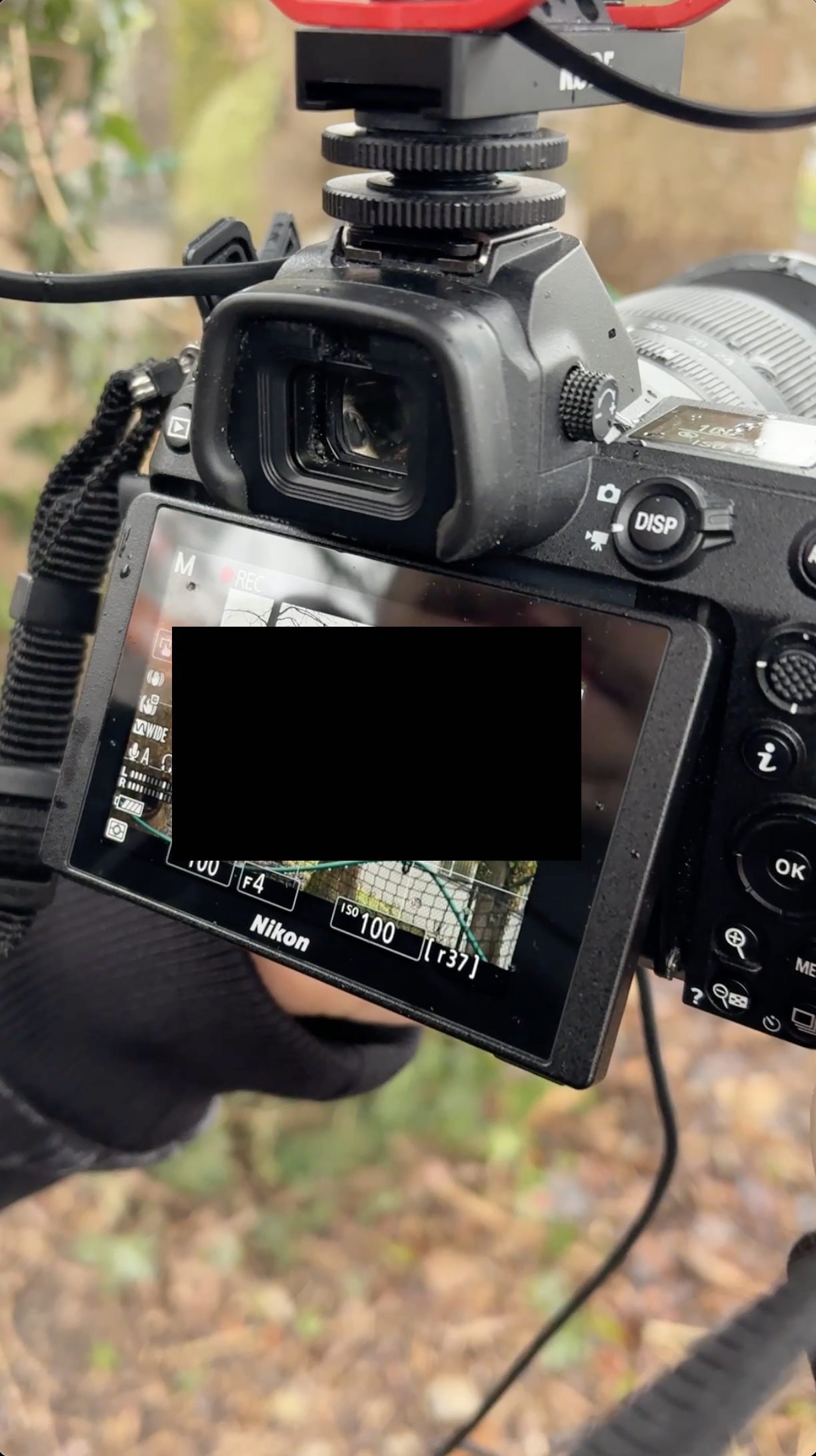
The institutional rules also directly shaped how I was able to document the workshop—most notably in the camera angles I was forced to use, as these images show:


The documentation process made the power dynamics of the workshop visible, as filming turned a participatory moment into a situation where observation, supervision, and research overlapped. My discomfort revealed the ethical and methodological tension of conducting participatory research in prison settings, where even attempts to create space for participants’ expression are still shaped by institutional control, visibility, and unequal power relations.
We—RS, thesecond guard, Massimo, the other inmate, and I—stand around one of the participants as he takes a print from the phone. Massimo is filming. I feel uncomfortable. The situation feels unnatural: five people watching one person. It gives the impression that he is the object of research, even though my focusis on the architecture and its material elements. I find myself wanting to change the situation, to shift this dynamic, but I know that I can’t. I try to position my body in a way that might ease the tension.
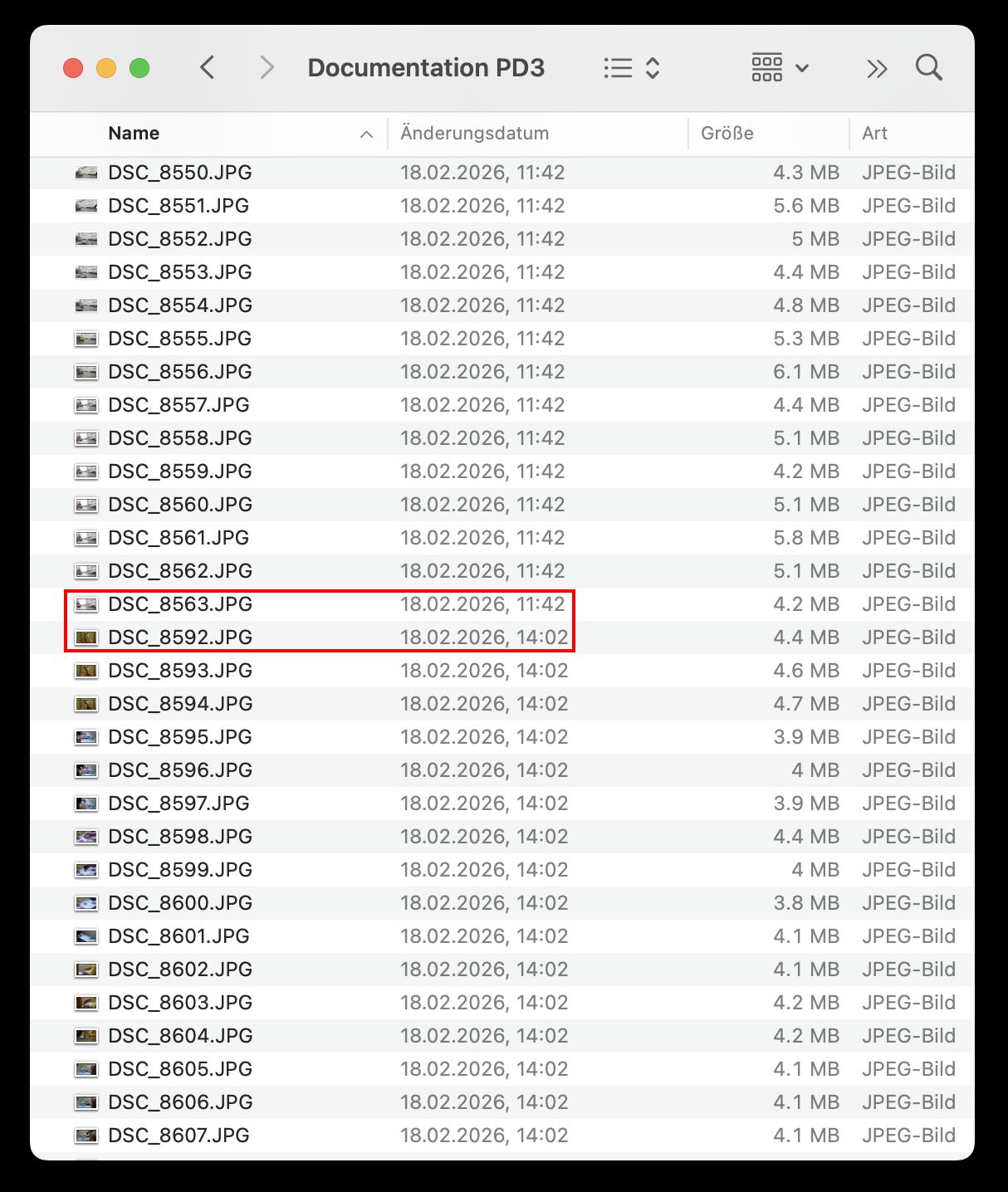
The institution retained authority over whether and how the material had to be censored, and whether I was permitted to use it at all.
After all the participants have left the room, only RS, VB, Massimo, andI remain. RS and VB examine the prints and erase any existing names or cell numbers. RS then asks me to hand over the camera’s SD card, explaining that heand VB will review the material in his office. While they are gone, I tidy up the room and gather the prints and materials.
I feel nervous and anxious; my body is tense. I worry that I may not beallowed to use the video footage. Although this had been agreed upon with RS inadvance, he now seems to have serious reservations. I feel at the mercy of thesituation and become acutely aware of how much the form and depth of my thesis depend on the rules of the system.
After some time, RS returns and informs us that the footage of the building must be deleted, which he proceeds to do in front of us on his laptop.He then explains that he does not feel comfortable with the video material andthat we should therefore work exclusively with the photographs. He does notwant us to leave the building with the video files on the SD card. DC re-enters the room and explains that he has just spoken with themedia office. Since Massimo and I have signed a confidentiality agreement, weare legally obliged to handle the material in accordance with its terms. Therefore, we are permitted to use the video footage.
The SD card is returned to us, and we are escorted back to the entrance.
Massimo and I walk the short distance across the courtyard to the entrance gate, which opens automatically in front of us and closes again behind us. We walk side by side in silence for a few moments until I feel a palpable tension leave my body. I experience an immense sense of relief—both because weare allowed to keep the video material and because the workshop ultimately unfolded successfully.
On the train ride home, we realize how exhausted we are, and how much the day has drained our energy and nerves. Fieldnotes, PD3
These moments show that prisons control not only spaces and bodies, but also representation, authorship, and public knowledge about what goes on inside them. The challenges of doing this research are themselves findings.
Field Observation Pre-Trial Detention 1